
Friday, November 6Forgiveness
Who Holds the Paper
And he kneeled down, and cried with a loud voice, Lord, lay not this sin to their charge. And when he had said this, he fell asleep.
DevotionalFriday, November 6

Or read it here
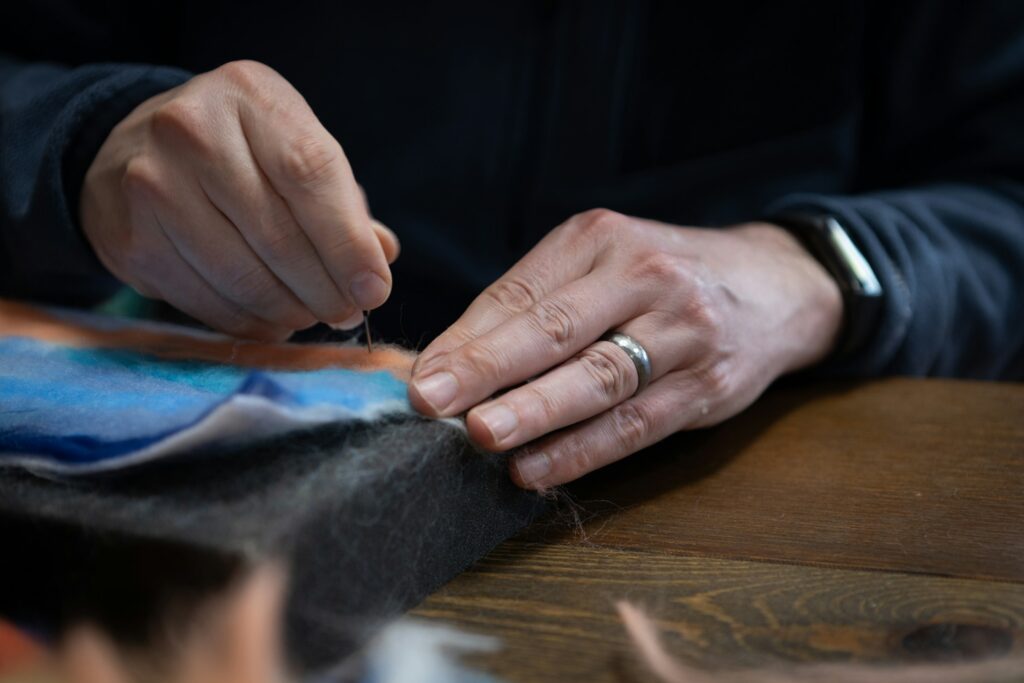
NPR reported this week on Gary Tyler. He was arrested at sixteen and spent more than four decades in a Louisiana prison on a conviction built on testimony that was later recanted. At Angola he learned to quilt. Now, at 68, he has his first solo museum show.
I will not speak for what that man carried. That is his to tell. What stays with me is the shape of it: a whole life bent around words somebody later took back. Picture a folding table after group, chairs stacked against the wall, an older man and a seventeen-year-old who will not go home yet.
“He lied on me. In front of the judge. And I’m supposed to pray for him?”
“Nobody said supposed to.”
“Then what are you saying?”
“I’m saying he probably forgot what he said. You can quote it word for word.”
“Because it cost me.”
“It did. So who’s holding the paper on it?”
Luke wants us to see that Stephen’s trial ran on the same fuel. Men were put up to it, and the council “set up false witnesses” (Acts 6:11-13). Then came the stones. Then came this:
Lord, lay not this sin to their charge.
Read it slowly. Stephen calls it sin. He does not pretend the testimony was true or the rocks were a misunderstanding. His words belong in a courtroom: do not let this stand against them, do not enter it on their account. He names the charge in full. Then he takes his own hand off the paper and gives it to the Judge.
Most of us keep the transcript. You can recite what your father said in 2011, the tone included. The mind replays an injury because it believes rehearsal is protection, that if you keep it in front of you it cannot happen again. And if we are honest, part of us likes the file. It makes us the innocent one in every story. So the file stays open, and every replay adds a day to a sentence nobody handed you.
Stephen did not squeeze that prayer out of willpower. Moments earlier he looked up and saw Jesus standing at the right hand of God (Acts 7:55-56). This is the same Jesus whose own conviction rested on witnesses who could not get their stories to agree (Mark 14:56), who prayed for the men driving the nails. Stephen prays what he sees. At 2 a.m. when you cannot release it, stop staring at the one who wronged you and look at the One who released you.
Then Luke slips in a detail. The witnesses laid their coats at the feet of a young man named Saul. The prayer covered the coat-holder, and two chapters later he is blind on the Damascus road. You may be praying for someone God intends to make your brother. You have also held coats. The version of the divorce you tell at dinner. The edit that keeps you clean. You need this mercy as badly as you need to give it.
Releasing the debt in your heart does not mean the record gets to stay false. Stephen forgave minutes after preaching the hardest sermon in Acts. We can give up revenge and still demand that testimony be tested and wrongful convictions be reviewed. Forgiveness can happen this morning. Trust waits on repentance, and reconciliation can take years.
“So what do I do with the paper?”
“Hand it up. Every morning, if you have to.”
Pray
Lord, I have kept the transcript. I replay what was said and done to me, and some days I enjoy being the innocent one. I have also told stories that made me look clean when I was not. Forgive me as you have already paid to forgive me. Jesus, you were lied about and condemned, and you prayed for the men who did it. Let me see you standing the way Stephen did. I hand you the paper on the person I name in my heart right now. Do not lay this sin to their charge. Give me courage to seek truth where it has been buried, and patience for the long road back.
Practice
Write the name of one person whose wrong you still rehearse and one line about what it cost you, then pray Stephen's prayer over that name out loud and tear up the paper. If the wrong left a false record somewhere, take one step today toward getting the truth told.
Carry
Hand it up. Every morning, if you have to.