
Our work · Fatherhood
Every father leaves a legacy. By design or by default.
We walk with fathers 25 and under: raising children on very little, coming home from jail or prison, carrying wounds from their own childhood. What they hand down should be chosen, not inherited.

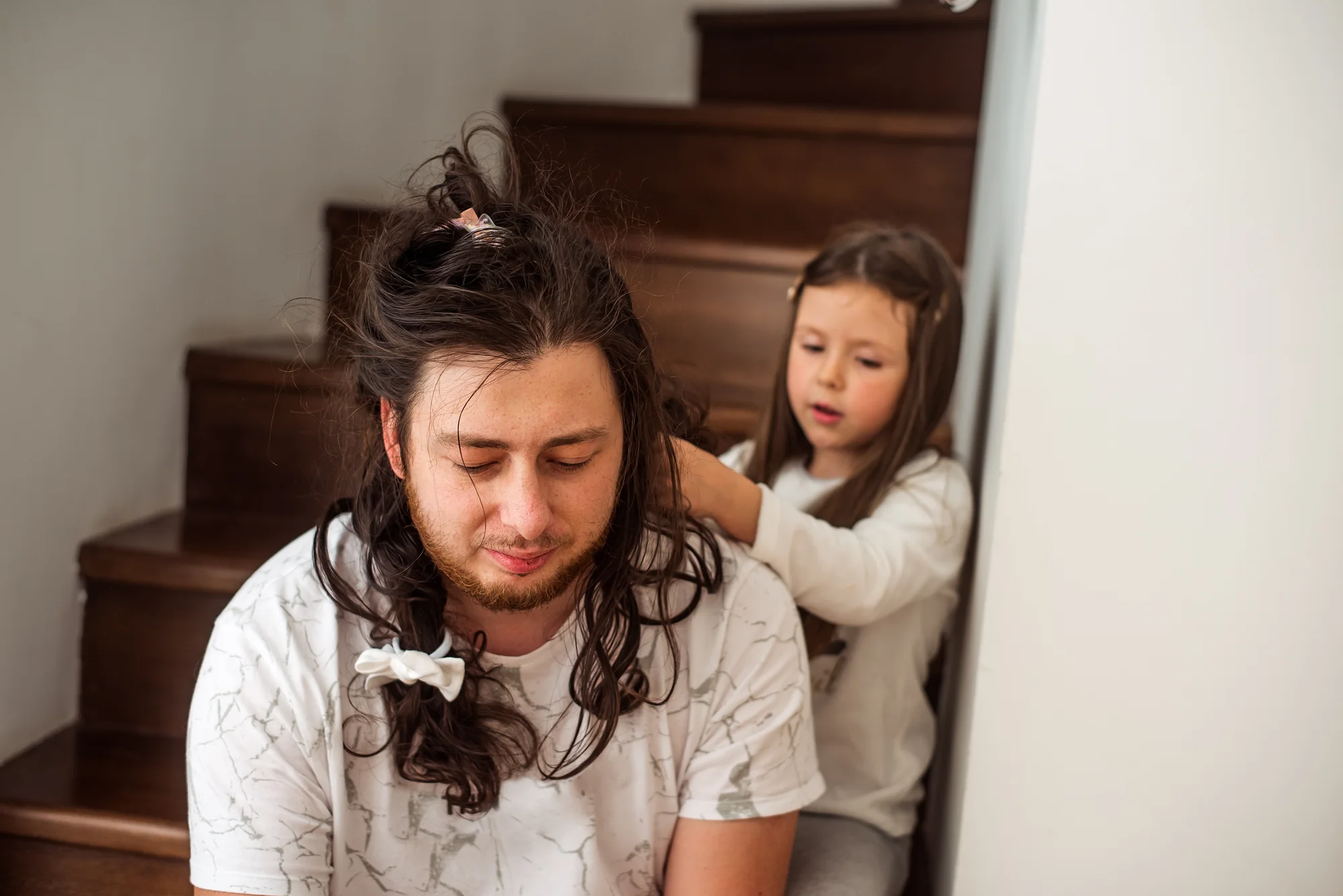
Why fatherhood
The cycle is a wound, not a verdict.
Many of the young men we sit with are already fathers, or will be soon. Many grew up without their own. Nobody handed them a map, and the one the street handed them leads back to the same place.
We believe a father restored to his children changes more than one household. It changes what the next generation thinks a man is.
Who young fathers are
Carrying more than most men twice their age.
3 million
Americans ages 18 to 24 are parents, raising 3.4 million children. 69 percent of those children live in families earning less than twice the poverty line.1
$23,000
is the median family income of parents ages 18 to 24.1
1 in 5
adults ages 18 to 24 report four or more adverse childhood experiences, such as abuse, neglect, violence at home or a parent in prison. That is among the highest rates of any age group.2
Over half
of children born to unmarried parents in large U.S. cities had a father who had been to jail or prison. For children of married parents it was 17 percent.3
1.3 million
children had a father in a state or federal prison in 2016. Nearly half of men in state prison are fathers of minor children.4
68%
is how much depressive symptoms rose, on average, over the first five years of fatherhood among men who became fathers around age 25 and lived with their children.5
Why it matters
A father’s presence is not a detail.
16 studies
that followed children for years tied a father’s active engagement to fewer behavior problems in boys, fewer psychological problems in young women, less criminal behavior in low-income families and stronger cognitive development.6
52 studies
of fathers who live apart from their children found that positive, engaged fathering was linked to small but real benefits for their children.7
Higher risk
of incarceration for teenagers raised without their father in the home, even after accounting for income, parents’ education and race.8
The gap
They want to be there. Then the gap opens.
Most young fathers are not running from their children. In a national study of children born to unmarried parents, more than 8 in 10 couples were still together when their baby was born, and the vast majority of fathers said they wanted to help raise their child.9
Five years later, only about half of the fathers living apart had seen their child in the past month.9 The intention was real. What failed was everything around it.
Closing the gap
Where young fathers fall away, and what we do about it.
Money runs out
In nine large states, 70 percent of unpaid child support debt was owed by parents with no reported income or $10,000 a year or less.12
Our answer. Work, financial literacy and a plan for money, plus help understanding the systems around his child, so he can provide instead of hiding from a debt he cannot pay.
The system takes him out of the house
Fathers who had been to jail or prison earned 38 to 79 percent less a year than comparable fathers.3 One in 28 American children has a parent behind bars.15
Our answer. We start inside juvenile facilities and keep walking with him on the way home, so fathering begins where he is, not after he is out.
He carries his own childhood
More than 1 in 5 young adults carry four or more adverse childhood experiences.2 Among children facing early adversity, an engaged father at age one helped buffer later behavior problems.13
Our answer. We start with the man in the mirror. Mentors who came through the same fire help him name what happened to him, so it stops flowing through him to his children.
Nobody asks how he is doing
About 1 in 10 fathers experience depression during pregnancy or after birth.14 For young fathers living with their children, symptoms climb through the first five years.5
Our answer. We ask. Every man has a brotherhood around him and a mentor who notices, and we connect him to counseling when he needs more than we can give.
The relationship ends
When unmarried parents split, a father’s involvement drops sharply, and the drop is steepest when the children are young.10
Our answer. We teach co-parenting as its own discipline. What happened between the parents and the job of raising the child are two different things, and the child is never the weapon.
School and work slip away
Becoming a father as a teenager cuts a young man’s chance of finishing high school by 15 percentage points.11
Our answer. Every father leaves with a plan for school and work and a mentor who keeps asking about it.
What the evidence says works
Classes alone are not enough.
The largest federal test of fatherhood programs randomly assigned low-income fathers to four programs. The fathers became more nurturing parents. Their contact with their children, their earnings and the support they paid did not change.16
We take that seriously. A curriculum can change how a man thinks about his child. It takes work, co-parenting help and men who stay for years to change what his child actually receives. That is why we build all three around every father we serve.
What we teach
The core of the work.
Nine convictions sit under everything we do with fathers.
01
Face the man first
You were failed, and that does not excuse failing. Fatherhood starts with honesty about the man in the mirror.
02
Protector, not controller
What kept a man alive out there can cost him at home. We help him tell the difference.
03
Know the child you are raising
A child is not a small version of you. Presence means learning who they actually are.
04
Legacy by design
Every father hands something down. We name what came through the generations and decide what ends here.
05
Raise them together, even apart
What happened with the mother of your child and the job of raising that child are two different things. Never use the child to win.
06
Strength with tenderness
Strong was never the absence of feeling. Children learn what love looks like by watching their father.
07
Show up in every system
School, the doctor, the court, the paperwork. A father’s name belongs in every file that holds his child.
08
The right to start again
Grace is real, and so is repair. An apology asks for something. Making it right is the work.
09
No man does this alone
Isolation is where fathers quietly quit. Every man leaves with men around him.
How it reaches them
In the facility, at the center, on a phone.
We meet fathers 25 and under wherever they are: inside juvenile facilities, in weekly groups at our center in Miami, and online, on whatever schedule work and custody allow.
The work is built on Legacy: Young Fathers, our curriculum written for young fathers in and around the justice system, and on mentors who stay after the last lesson.
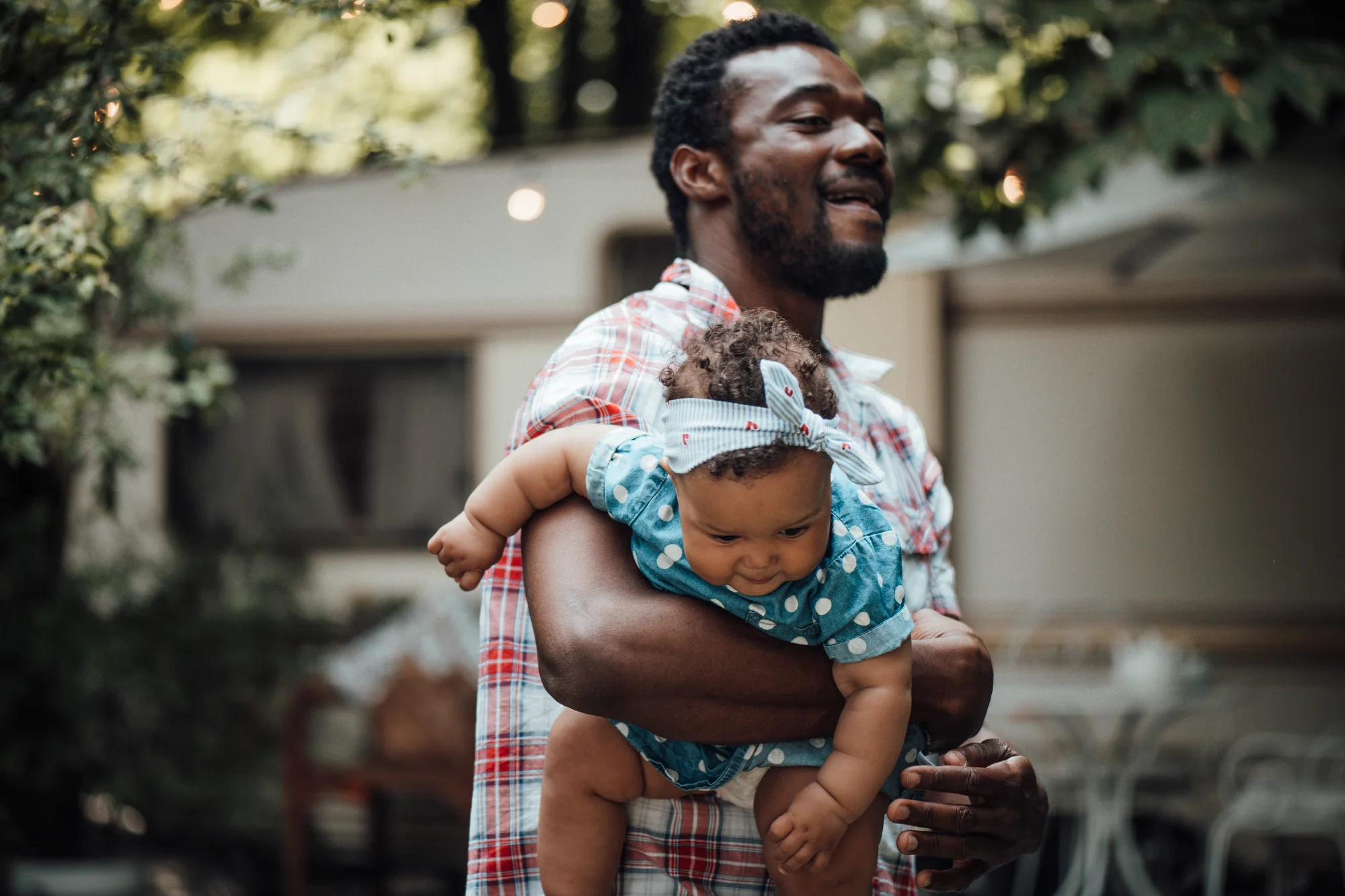
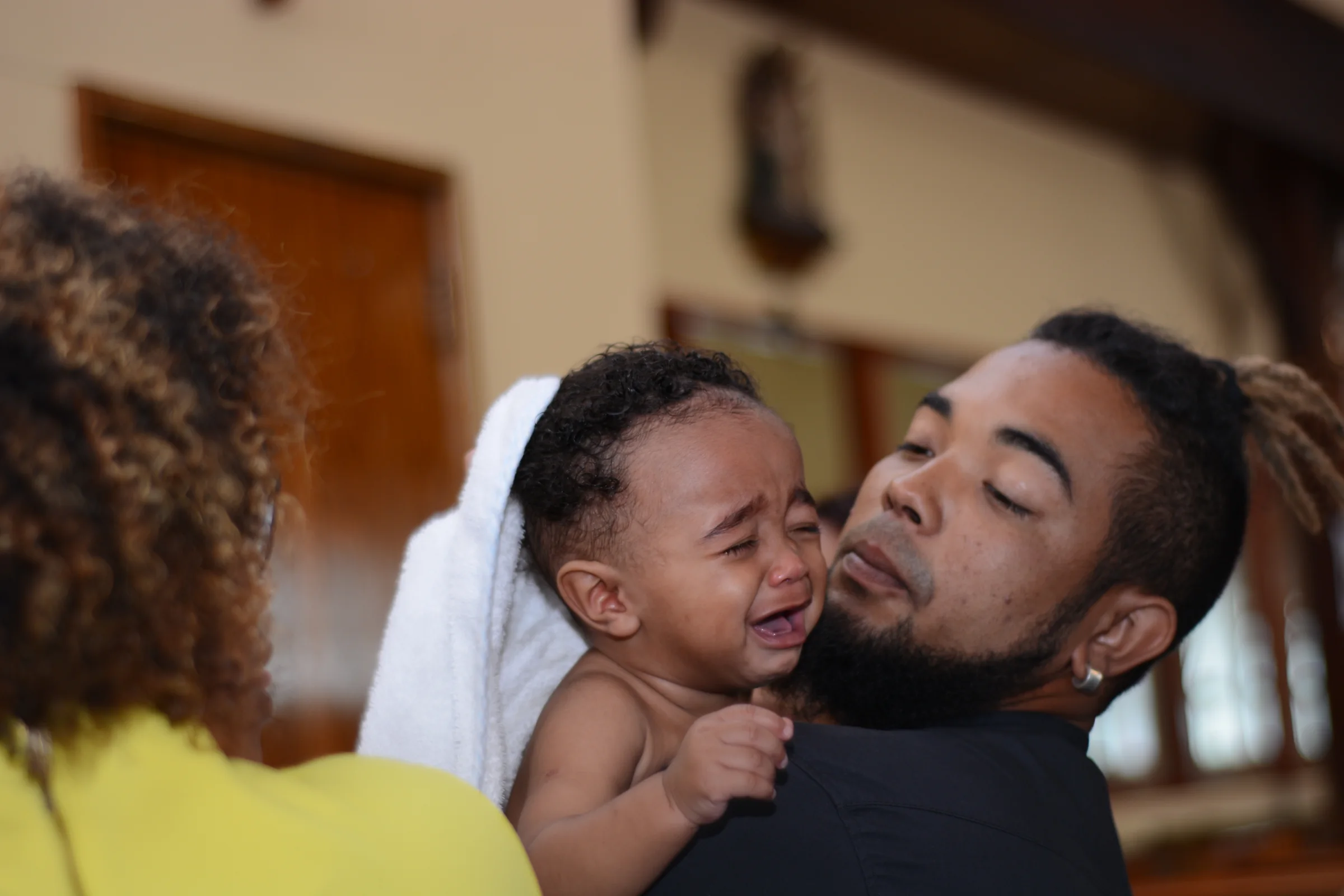
The word we stand on
A father to the fatherless, a defender of widows, is God in his holy dwelling. God sets the lonely in families.
Psalm 68:5, 6
Your move
Stand with a father.
Start with whichever fits.
- Connect as a fatherWhatever your situation, reach out. A real person answers.
- Mentor a fatherBe the man someone needed. Apply to mentor.
- Refer a fatherCourts, agencies, churches and employers: start a conversation.
- Give monthlyKeep fathers in the room week after week. Join the Revolutionaries.
Sources
- Annie E. Casey Foundation. Opening Doors for Young Parents. KIDS COUNT Policy Report, 2018. Read it
- Swedo, E., et al. “Prevalence of Adverse Childhood Experiences Among U.S. Adults, Behavioral Risk Factor Surveillance System, 2011 to 2020.” MMWR 72(26), Centers for Disease Control and Prevention, 2023. Read it
- Future of Families and Child Wellbeing Study. “Parental Incarceration and Child Wellbeing in Fragile Families.” Research Brief 42, Princeton and Columbia Universities, 2008. Read it
- Maruschak, L., Bronson, J. and Alper, M. Parents in Prison and Their Minor Children: Survey of Prison Inmates, 2016. Bureau of Justice Statistics, 2021. Read it
- Garfield, C., et al. “A Longitudinal Study of Paternal Mental Health During Transition to Fatherhood as Young Adults.” Pediatrics, 2014. Read it
- Sarkadi, A., et al. “Fathers’ involvement and children’s developmental outcomes: a systematic review of longitudinal studies.” Acta Paediatrica 97(2), 2008. Read it
- Adamsons, K. and Johnson, S. “An updated and expanded meta-analysis of nonresident fathering and child well-being.” Journal of Family Psychology 27(4), 2013. Read it
- Harper, C. and McLanahan, S. “Father Absence and Youth Incarceration.” Journal of Research on Adolescence 14(3), 2004. Read it
- Future of Families and Child Wellbeing Study, Princeton and Columbia Universities. Fact sheet. Read it
- Tach, L., Mincy, R. and Edin, K. “Parenting as a Package Deal: Relationships, Fertility, and Nonresident Father Involvement Among Unmarried Parents.” Demography 47(1), 2010. Read it
- Fletcher, J. and Wolfe, B. Teenage fatherhood and young adult outcomes. Economic Inquiry, 2011, as reported by the Yale School of Public Health. Read it
- Sorensen, E., Sousa, L. and Schaner, S. Assessing Child Support Arrears in Nine Large States and the Nation. The Urban Institute for the U.S. Department of Health and Human Services, 2007. Read it
- Wang, X., Wu, Q. and Phelps, B. “How Do Fathers Help? A Moderation Analysis of the Association between Adverse Childhood Experiences and Child Behavioral Health in Fragile Families.” Child Psychiatry and Human Development 53(4), 2021. Read it
- Paulson, J. and Bazemore, S. “Prenatal and Postpartum Depression in Fathers and Its Association With Maternal Depression: A Meta-analysis.” JAMA 303(19), 2010. Read it
- The Pew Charitable Trusts. Collateral Costs: Incarceration’s Effect on Economic Mobility, 2010. Read it
- Avellar, S., et al. Parents and Children Together: Effects of Four Responsible Fatherhood Programs for Low-Income Fathers. OPRE Report 2018-50, Administration for Children and Families, 2018. Read it